What Drain Snake Cable Size Actually Means
When people say “drain snake size” they usually mean two things: cable diameter and cable length. Cable diameter is measured in inches, typically ranging from 1/4 inch up to 1 inch or larger for mainline machines. Length is how far the cable can reach into the pipe. Both matter. A cable that is too thin for a 4-inch main line will flex and spin without grabbing anything useful. A cable that is too thick will not fit through a 1-1/4 inch sink drain at all.
Most residential drain jobs fall into five categories. Each one has a cable size range that works and a cable size that wastes your time. Here is the breakdown.
Job 1: Slow Bathroom Sink or Tub Drain
What you are dealing with
Bathroom sinks and tubs clog with hair, soap scum, and toothpaste buildup. The drain lines are small, usually 1-1/4 inch to 1-1/2 inch pipe. You are not going far and you are not pulling out anything industrial.
Right snake size for bathroom drains
A 1/4-inch cable at 15 to 25 feet is the standard call here. It is thin enough to navigate the P-trap and the tight turns in a small drain line. A hand-powered drum auger works fine for most of these jobs. Some plumbers carry a small electric machine with a 1/4-inch cable for speed, but for most bathroom sink clogs a hand auger gets you there in under five minutes.
Do not go thicker than 5/16 inch on a 1-1/4 inch drain. You will struggle to feed it and risk damaging the drain assembly. Do not go shorter than 15 feet or you may not clear a clog that sits past the trap.
Job 2: Clogged Toilet
What you are dealing with
Toilets have a built-in trap in the porcelain itself. The blockage is almost always in that trap or just past it in the closet flange area. You are not snaking far, but you need the right tool or you will scratch the porcelain.
Right snake size for toilet clogs
Use a closet auger, also called a toilet auger. These are designed specifically for toilet work. They have a rubber sleeve that protects the bowl from scratches and a 3-foot to 6-foot cable, usually around 5/16 inch in diameter. That is the right tool for this job every time.
Do not use a standard drum auger in a toilet without protection. You will mark the porcelain and the customer will notice. If the clog is past the trap and into the drain line, then you are into a different category — see the main line section below.
Job 3: Kitchen Sink Stoppage
What you are dealing with
Kitchen drains deal with grease, food debris, and soap. The drain line is usually 1-1/2 inch to 2 inch pipe. Grease clogs tend to sit further down the line than people expect because hot grease flows and then hardens once it cools. You need to reach further than a bathroom clog.
Right drain snake cable size for kitchen sinks
A 5/16-inch or 3/8-inch cable at 25 to 50 feet is the right fit here. The 5/16 inch works well in 1-1/2 inch lines. Step up to 3/8 inch if you are working a 2-inch line or if the clog is heavy. You want enough cable length to reach past the trap, through the wall, and into the stack if needed.
An electric drum auger or a small sectional machine speeds this up. Hand-cranking 35 feet of cable through a grease-coated kitchen drain is a workout. Bring a bucket. Grease clogs are messy when they break free.
Job 4: Slow or Blocked Shower Drain
What you are dealing with
Shower drains are usually 2-inch pipe. The clogs are hair and soap, same as a tub but often worse because more volume goes through a shower. The drain line may run a longer horizontal distance before hitting the stack.
Drain snake size for shower drain clogs
A 3/8-inch cable at 25 to 50 feet handles most shower drain jobs. In a 2-inch line you have room to work and enough cable stiffness to push through compacted hair clogs. A 5/16-inch cable will work in a pinch but may struggle with a dense blockage.
Some plumbers use a 1/4-inch cable on shower drains and it works fine on light clogs, but for a fully blocked drain you want the extra beef of a 3/8-inch cable. If the shower drain has a hair trap cover, remove it and pull out what you can by hand first. You may not even need the snake.
Job 5: Main Line Blockage
What you are dealing with
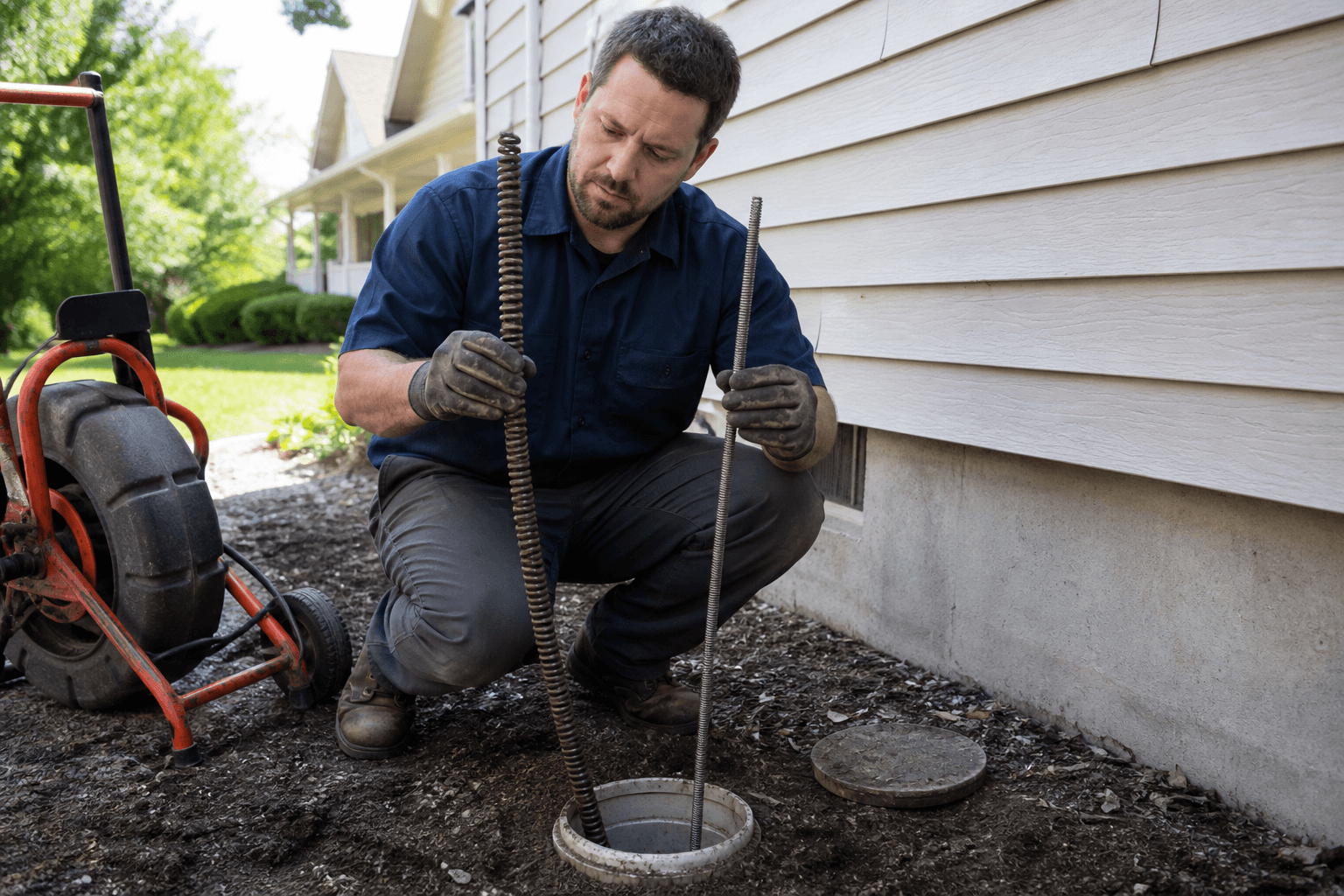
Main line clogs are a different game. You are working in 3-inch, 4-inch, or occasionally 6-inch pipe. The blockage could be grease, roots, debris, or a combination. The clean-out access is usually 50 to 100 feet from the stack to the city connection. You need a serious machine and serious cable.
Right snake size for main sewer line
A 1/2-inch to 5/8-inch cable at 75 to 100 feet is the standard for residential main lines. Most plumbers use a sectional machine or a heavy-duty drum machine for this. A 1/2-inch cable is the minimum you want in a 3-inch main. For a 4-inch line, 5/8-inch cable gives you better torque transfer and is less likely to curl up in the pipe instead of clearing the blockage.
Root intrusion in a main line may need a cutting head — a blade designed to cut through roots — instead of a standard auger head. Check the pipe size first. Running a 3/8-inch cable in a 4-inch main is like sending a puppy to do a job meant for a dog. It may eventually get there, but it is going to take too long and not do a clean job. [LINK: how to clear tree roots from drain pipes]
When to Use a Drum Auger vs a Sectional Machine
Drum auger: best for short residential runs
A drum auger keeps the cable coiled inside a drum. It is compact, fast to set up, and ideal for jobs under 50 feet. Most bathroom, kitchen, and shower drain jobs are drum auger territory. The downside is that cleaning the cable is messier and the drum limits your maximum cable length.
Sectional machine: best for main lines and longer runs
A sectional machine uses individual cable sections that you connect together as you feed them into the pipe. This lets you go as deep as you need. The trade-off is setup time and the need to handle multiple cable sections. For any main line job or longer commercial run, a sectional machine is the professional standard.
A Tool That Saves You the Guesswork
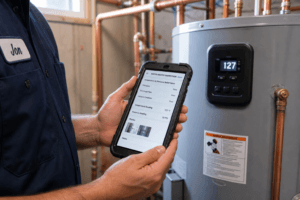
There is a Drain Cleaning Cable and Access Selector tool built specifically for working plumbers. You put in the drain type and pipe size, and it tells you the right cable diameter, the right cable length, and the best access point to use. It cuts out the second-guessing, especially on jobs where the drain layout is not obvious. If you are training someone new or just want a fast reference between jobs, that kind of tool pays for itself the first time it stops you from grabbing the wrong machine.
Frequently Asked Questions
Can I use a 1/4-inch cable on a kitchen drain?
You can, but it is not ideal. A 1/4-inch cable may not have enough stiffness to push through a heavy grease clog in a 1-1/2 inch or 2-inch line. It can fold back on itself instead of advancing. Use 5/16 or 3/8 inch for kitchen drains to avoid this problem.
How do I know if my main line is 3 inch or 4 inch?
The quickest way is to look at the clean-out fitting. Most residential main clean-outs are 4 inch. If you can get eyes on the pipe — either at the clean-out, under the house, or where it exits the foundation — the diameter is usually marked on PVC or can be measured. When in doubt, go with the larger cable size. A 5/8-inch cable works fine in both 3-inch and 4-inch pipe.
What happens if I use a cable that is too small for the pipe?
The cable will have too much room to flex and spin without gripping the clog or the pipe wall properly. In a main line, a thin cable may just spiral in the pipe without advancing. You waste time and the clog stays put. Always match cable diameter to pipe size as closely as the job allows.
How long should a drain snake cable be for a two-story house?
For a bathroom or kitchen drain on an upper floor, 50 feet is usually enough to reach the stack and clear the blockage. For a main line in a larger house, go to at least 75 feet and have 100 feet available. Older homes on large lots can have longer runs to the street connection. When you are unsure, bring more cable than you think you need. [LINK: how to locate clean-out access points]
Do drain snake cable sizes vary by brand?
The cable diameters are fairly standard across brands — 1/4, 5/16, 3/8, 1/2, and 5/8 inch are the common sizes. What does vary is cable quality, flexibility, and how well the cable holds up to repeated use. A cheaper cable may kink or break sooner. For daily use machines, buy from a recognized plumbing equipment supplier rather than a big box store cable.
When should I camera the line instead of snaking it?
If you are getting callbacks on the same drain, if the snake clears the clog but it comes back fast, or if the customer reports multiple drains backing up at once, a camera inspection tells you what is actually happening inside the pipe. Snaking a broken or collapsed pipe just delays the real problem. A camera pays for itself on jobs where snaking alone is not the full answer. Drain camera inspection guide for plumbers